So here’s the thing about pain: it’s complicated.
Last weekend I was on call when my phone rang. It was an elderly woman in her 80s with advanced cancer that had been stable. Her chart said “pain well-controlled on optimized opioid regimen” – one of those clinical phrases we use that sometimes means everything and sometimes means nothing at all.
She started talking about bone pain and muscle aches, but within minutes our conversation had morphed into something entirely different. She told me about feeling isolated. About being traumatized by a previous hospitalization. About how hard it was becoming to trust people.
Then my cat meowed in the background.
“Is that your cat?” she asked, her voice suddenly lighter. “I prefer animals to people now. People only disappoint me.”
After assessing her, I realized she was medically stable. No medication adjustments were needed. But her suffering? That was real and immense and not something I could fix with my prescription pad. Her physical pain was amplified—to a significant degree—by her profound loneliness.
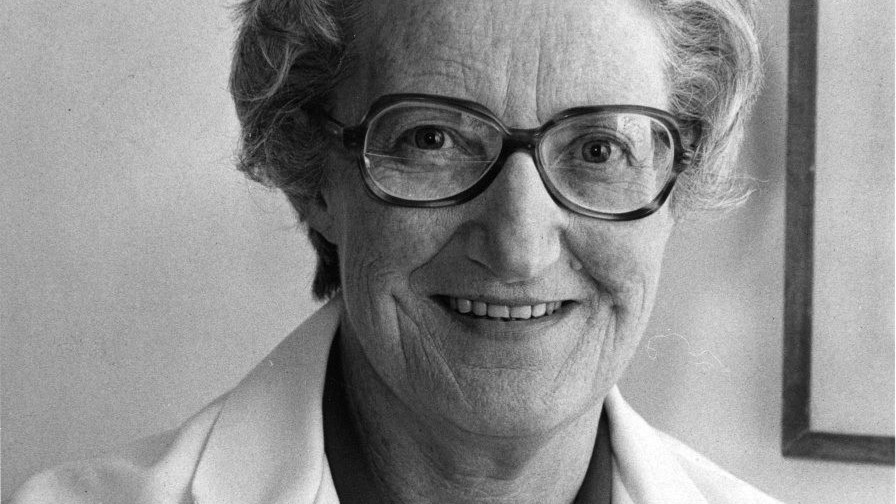
This phenomenon has a name. Dame Cicely Saunders called it “Total Pain,” and its origin story is, I think, one of the most beautiful and underappreciated moments in medical history.
The Origins of Total Pain: A Polish Refugee’s Legacy
In 1948, Saunders was working as a medical social worker at St. Thomas’ Hospital in London when she met David Tasma, a 40-year-old Polish Jewish refugee with terminal cancer. Tasma had escaped Warsaw before the Nazi occupation but had left his family behind—most of whom would later die in the Holocaust. He worked as a waiter in London, mostly alone, mostly unremarkable in a way that systems tend to render people unremarkable.
And now he was dying in a foreign country, surrounded by a healthcare system that cared mostly about his body but not necessarily about… well, him.
Over two months, Saunders visited Tasma regularly. They developed one of those intense connections that sometimes happen when people meet at life’s edge. She listened as he talked about isolation and meaning and the terrible feeling of having survived so much only to die alone.
In one of their final conversations, Tasma told Saunders something that would change everything: “I only want what is in your mind and in your heart.”
I’m Polish too – an immigrant like Tasma, though in vastly different circumstances – and there’s something about his words that hits especially hard. He wasn’t asking for more morphine or better surgery or miracle cures. He was asking for connection. For someone to see him, not just his disease. For someone to bring both their knowledge (“what is in your mind”) and their humanity (“what is in your heart”) to his bedside.
When Tasma died in February 1948, he left Saunders £500 in his will – a significant amount then – which became the first donation toward St. Christopher’s Hospice. Saunders later placed a plaque at the hospital that read: “David Tasma, died 25 February 1948. Founder of St. Christopher’s Hospice.”
The relationship so moved Saunders that she went to medical school specifically to improve care for the dying. And here’s where it gets even more amazing: she began meticulously recording patients’ own words about their pain, and through these narratives, she developed the concept of Total Pain – suffering that extends beyond physical sensation to include psychological distress, social challenges, and spiritual questions.

I love this story because it reminds us that sometimes the most transformative ideas in medicine don’t come from labs or clinical trials but from truly listening to one person’s experience.
The Infinity of Human Suffering
Saunders conceptualized Total Pain with four interconnected dimensions:
Physical pain in cancer is complex. There’s nociceptive pain from tissue damage, neuropathic pain from nerve involvement, and central sensitization where the nervous system essentially gets stuck in pain mode.
Psychological suffering shows up as anxiety, depression, and trauma responses. My elderly patient’s lingering trauma from her hospitalization is unfortunately a common experience. Studies show around 40% of cancer patients experience significant psychological distress, but we’re not great at recognizing or treating it.
Social pain involves isolation, changed relationships, and lost identity. When my patient said she prefers animals to people, she was telling me something profoundly important about her social suffering.
Spiritual or existential distress emerges as patients face mortality and search for meaning. Saunders wrote that this dimension often includes “a need to find some meaning in the situation, some deeper reality in which to trust.” When someone says they can’t trust people anymore, they’re not just making a social statement – they’re expressing an existential one.
The Neuroscience of Total Pain
Here’s where the science gets really interesting. These dimensions of suffering aren’t just conceptually related – they’re neurobiologically connected.
When you experience social rejection, your dorsal anterior cingulate cortex lights up. Know what else activates that region? Physical pain. This is why we use the same language (“hurt,” “broken”) for physical and social pain – our brains process them similarly.
Even more fascinating: acetaminophen (Tylenol) reduces social pain. A 2010 study showed it decreased neural activity in the parts of the brain responding to social exclusion. We’re literally using pain relievers to treat hurt feelings, and it works.
Opioids, too, work on multiple levels. They bind to receptors in pain pathways but also in the brain’s reward and emotional centers. This dual action might explain why they’re effective for Total Pain, especially at the end of life – they’re simultaneously addressing physical and emotional suffering.
Loneliness and isolation increase inflammatory markers like IL-6 and TNF-α, which can sensitize pain receptors. Meditation practices can physically change brain regions involved in pain modulation. All of this suggests that Saunders’ intuitive, observation-based concept has solid neurobiological foundations. When we address psychological, social, and spiritual concerns, we’re not just being nice – we’re targeting mechanisms that directly influence pain processing.
An Abundance of Approaches
So how do we actually identify and address Total Pain? Standardized pain scales don’t cut it.
Saunders emphasized patient narratives. She recorded their words because she believed their descriptions revealed the true nature of suffering. This remains essential – taking time to truly hear patients.
Questions that help:
- “Who can you turn to when you’re having a difficult day?”
- “Has your illness affected your ability to connect with others?”
- “What experiences with your medical care still trouble you?”
- “What gives you comfort during difficult times?”
Addressing Total Pain requires a team. Physical symptoms need optimal medication management. Psychological distress needs therapy and support groups. Social challenges need connection opportunities. Spiritual concerns need chaplaincy or meaning-centered approaches.
For my elderly patient, this meant:
- Maintaining her pain medication while acknowledging her complaints
- Connecting her with a trauma-focused therapist
- Exploring volunteer visitors or phone call programs
- And maybe some animal therapy, given her preference for four-legged companions
Looking for Better Pain Care
As oncology becomes increasingly technical and specialized, we risk fragmenting patients’ experiences. The Total Pain framework reminds us to zoom out and see the whole person.
Sometimes the most powerful intervention is simply recognizing the totality of a patient’s suffering. When I acknowledged my elderly patient’s isolation and trauma as legitimate sources of distress—not just background noise to her “real” physical symptoms—I could hear relief in her voice.
In our quest for precision medicine, molecular targets, and longer survival, let’s not lose sight of the total person behind the disease. As Saunders herself reminded us: “How people die remains in the memory of those who live on.”
David Tasma, a Polish refugee who might otherwise have been forgotten by history, changed the course of medicine by simply asking for what was in one caregiver’s mind and heart. And that’s the thing about suffering – it can be infinite in its dimensions, but so can our response to it, if we’re willing to bring both our minds and our hearts to the bedside.
What aspects of the Total Pain concept do you find most challenging to address in your practice? I’d love to hear your thoughts in the comments.
 Marcin Chwistek, MD