
What if, with the chemotherapy, I am going to feel worse than I am now?
When the conversation is complete, and the patient is still lost. Photo by Frederic Köberl on Unsplash Anne (not her real name) asked me this in our urgent care. She was recently diagnosed with locally advanced pancreatic cancer that was deemed unresectable, and presented with vomiting and abdominal pain. She was 75 years old, lived… Continue reading What if, with the chemotherapy, I am going to feel worse than I am now?

Between Pain and Suffering
She sat on the exam table with her eyes closed, back straight, completely still. She was in her late 30s, a mother of young children, a professional. Months earlier, she had undergone extensive surgery for head and neck cancer, followed by radiation. The treatment was brutal. Part of her jaw was removed, and she required… Continue reading Between Pain and Suffering

Between Algorithm and Presence: The Future of Palliative Care
A Case That Stayed With Me During a recent clinic, I was asked to urgently see a 65-year-old woman with metastatic lung cancer after multiple lines of therapy. For weeks, she had been declining: confused, exhausted, not eating, losing weight, and no longer sleeping. Her oncologist had decided that further cancer-directed therapy wasn’t feasible. When… Continue reading Between Algorithm and Presence: The Future of Palliative Care

The Language of the Body: Why Patient-Reported Symptoms Predict Survival
A few months ago, I met a man in his late sixties with advanced gastrointestinal cancer that had spread to his liver and lymph nodes. His wife had recently died. He lived alone in a three-story house. He knew his disease was incurable, but he was motivated; he wanted “more time.” At each visit, he… Continue reading The Language of the Body: Why Patient-Reported Symptoms Predict Survival

The Pattern We’re Finally Seeing
Photo by National Cancer Institute on Unsplash My mother had symptoms for months before her stage IV colon cancer diagnosis in the early 1990s. My father’s younger brother was a surgeon, we had medical expertise in the family, yet the cancer still went undetected until it was far advanced. At the time, I chalked it… Continue reading The Pattern We’re Finally Seeing

Shattered and Adaptable: Two Books, One Truth About Being Human
A few weeks ago, I sat with an elderly man with locally advanced bladder cancer and his daughter. She was worried; he no longer seemed like himself. He slept most of the day. He had no appetite, not even for her cooking, which he had once loved. She described how he used to fill the… Continue reading Shattered and Adaptable: Two Books, One Truth About Being Human

The Parallel Frontier: While We Cure Cancer, Can We Deliver Those Cures?
Photo by Kelly Sikkema on Unsplash The HIV Transformation In the mid-1990s, as a young resident new to the U.S., I was still learning about HIV/AIDS when a patient arrived in our Connecticut ER one night – a young man, close to my age, muscular and healthy-looking but desperately short of breath. I remember him… Continue reading The Parallel Frontier: While We Cure Cancer, Can We Deliver Those Cures?

From iPatient to aiPatient: Balancing Algorithms with Empathy
Fifteen years ago, Dr. Abraham Verghese introduced us to the concept of the “iPatient” – digital representations in electronic medical records that were commanding more physician attention than the actual humans in hospital beds. Today, we face something far more profound: the “AI Patient,” where artificial intelligence not only stores data but diagnoses conditions, generates… Continue reading From iPatient to aiPatient: Balancing Algorithms with Empathy

The Emotional Cost of Clarity
In palliative care, doing the right thing doesn’t always earn applause. Sometimes it gets you removed from the team. A recent JAMA article—”Why Good Palliative Care Clinicians Get Fired”—underscores the vulnerability of clinicians who communicate honestly about serious illness in a system that often treats dying as a failure. Even when delivered with skill and… Continue reading The Emotional Cost of Clarity
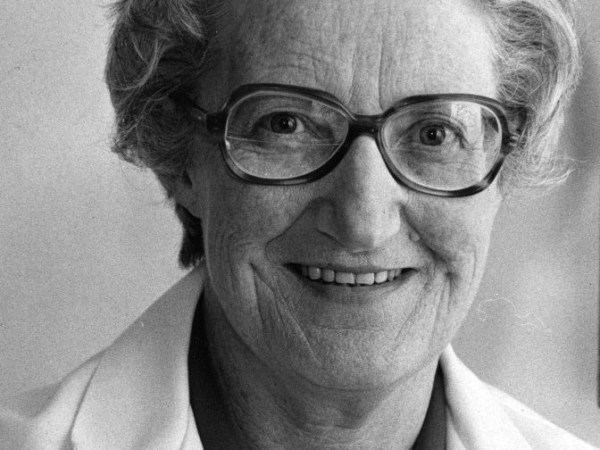
I Only Want What’s in Your Mind and Heart”: The Origins and Science of Total Pain in Oncology
So here’s the thing about pain: it’s complicated. Last weekend I was on call when my phone rang. It was an elderly woman in her 80s with advanced cancer that had been stable. Her chart said “pain well-controlled on optimized opioid regimen” – one of those clinical phrases we use that sometimes means everything and… Continue reading I Only Want What’s in Your Mind and Heart”: The Origins and Science of Total Pain in Oncology
Something went wrong. Please refresh the page and/or try again.
 Marcin Chwistek, MD