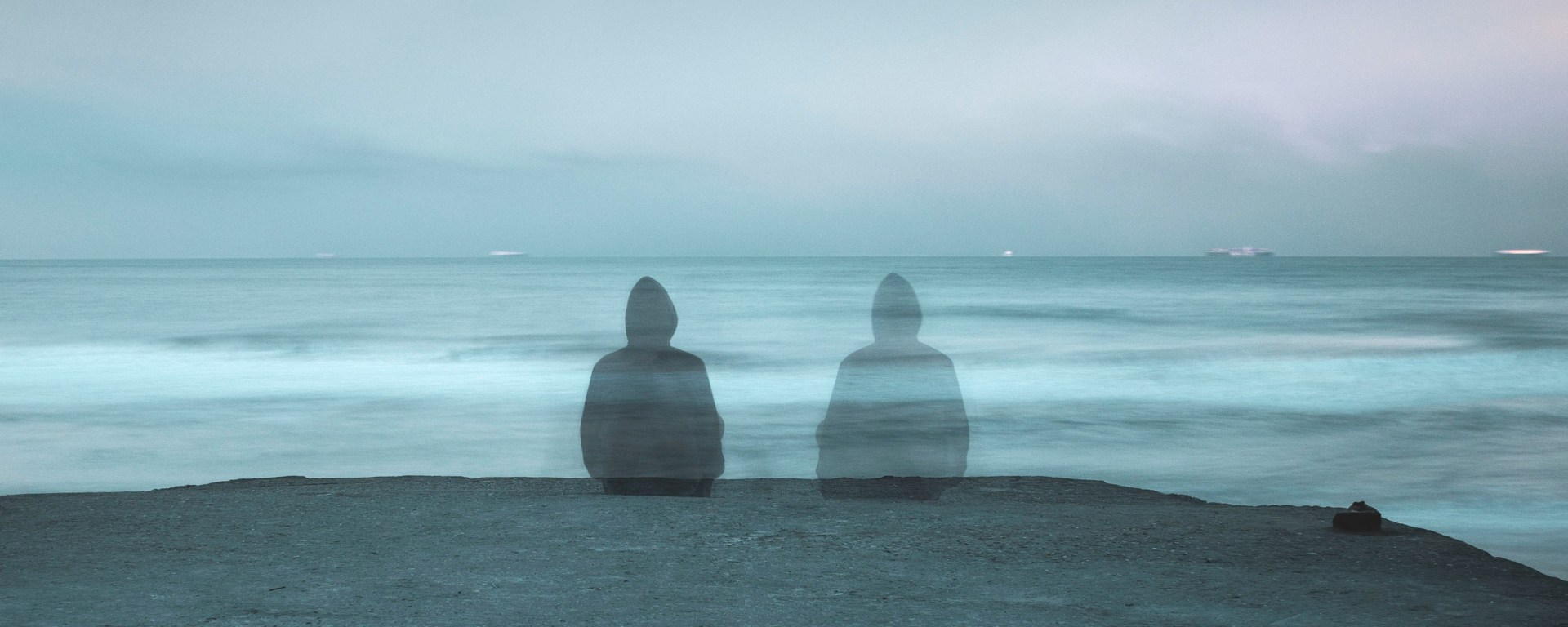
She sat on the exam table with her eyes closed, back straight, completely still.
She was in her late 30s, a mother of young children, a professional. Months earlier, she had undergone extensive surgery for head and neck cancer, followed by radiation. The treatment was brutal. Part of her jaw was removed, and she required skin grafting. Then, she underwent multiple weeks of radiation to the surgical site, compounding the damage.
She had healed remarkably well though. The wounds closed. The radiation burns faded. Her scar was hidden under the angle of her jaw. She came to the clinic well-dressed, makeup on. By every external measure, she was recovering.
But she had not been feeling better.
She had developed severe tightness in her jaw and needed to do painful stretching exercises multiple times a day. Her pain medications kept increasing. She told me they helped her get through the exercises, and also that they “did nothing.”
When she entered the clinic room, she sat on the exam table. I wheeled my stool close to her and looked directly at her. She didn’t open her eyes. I asked how she was feeling.
“I’m not feeling well,” she said quietly. “Nothing is good. Nothing helps.”
I did not get much else out of her that day. Her husband, sitting in the corner, did most of the talking. He described how hard it has been to take care of their two young children. How she had withdrawn from everything. Then his voice broke, and he said that he cries alone at night, by himself, in the kitchen.
The Circular Relationship
A paper published recently in the journal PAIN by Mark Sullivan and Amanda Williams makes an argument that will not surprise any clinician who has sat with patients like these: the relationship between pain and suffering is not linear. It is circular.
We have assumed that pain causes suffering. Disease damages tissue, tissue damage causes pain, and pain causes distress. The arrow points in one direction. Our treatments follow accordingly. We address the pain and expect the suffering to resolve. And that is true, but not entirely.
The evidence points the other way, too. Among U.S. adults with significant anxiety and depression, 56% have chronic pain, compared to 17% of those without. Prospective studies show that depression, trauma, and adverse childhood experiences often precede the development of chronic pain. Suffering is not just a consequence. It is also often a cause.
Sullivan and Williams write that if the relationship is circular, “we need to radically rethink our clinical approach to chronic pain.”
The System That Cannot Hold This
Here is what I find difficult to say: I already knew this.
I could see that the young mother’s pain was entangled with her shattered sense of self, her self-image, her withdrawal from her children, her husband’s hidden grief.
I could see it. I could not fix it.
And it wasn’t for lack of trying. I referred the young mother to psychiatry and psychology. I have asked a social worker to connect with her. During our frequent visits, we often talked about her experience, what to expect, and how it changed her life. She delayed going to a psychiatrist until I insisted. The social worker has focused on their financial distress and has helped with their piling bills. I used the interdisciplinary model. I made the referrals. The system worked as it was designed.
It still wasn’t enough.
The Arrow Runs Both Ways
I have another patient I’ve known for years. A cancer survivor, cured long ago, but left with neuropathy and severe arthritis. Her primary struggle, though, has been psychiatric illness. Severe depression. Past hospitalizations. Past suicide attempts. For a long time, she was stable. Then her psychiatrist retired.
In the current landscape, she couldn’t find consistent care. Her only support is her son, who is unemployed and checks on her daily. She lives alone. She spends most of her days in bed, in the dark, sleeping on and off. She says she can’t walk or move because of the pain in her knees.
A few months ago, she developed kidney failure and now requires dialysis, but she often refuses to go. She says it makes her pain worse and demands more pain medication. However, she’s inconsistent in taking what she has, and I did not believe prescribing more was either safe or effective. When I’ve given more in the past, it hasn’t changed anything. She accused me of not caring. She said she was not going to go and die at home. When I asked if she wanted to stop dialysis and transition to hospice, she said, “I’m not ready for that yet.”
I was on a phone call with her, her son, and a nurse practitioner who visits her at home. I pleaded with her to go to the emergency room to restart dialysis. She said she would think about it and asked the nurse practitioner to leave her house.
What Remains
The interdisciplinary approach assumes a patient who can receive what’s offered. But suffering this total sometimes builds walls against the very hands extended to help. Not because the patient is “difficult.” Because the suffering itself becomes a kind of fortress.
And perhaps there is something else, something harder to say.
Maybe the system isn’t the only problem (although we all know it could work so much better in so many ways). Maybe suffering this deep requires something medicine was never designed to provide.
Sullivan and Williams describe pain as “transdermal”; it crosses the skin, exists between people, not just within them. If that’s true, then treating it requires more than referrals and medications. It requires community. Friendship. Sustained presence. Someone who shows up not because they’re paid to, but because they belong to you.
Cicely Saunders understood this. St. Christopher’s Hospice wasn’t just an institution with better protocols. It was built on volunteers, on community, on presence that could not be billed. David Tasma, the dying man who inspired her, didn’t ask for better medicine. He only requested, “what is in your mind and heart.”
Both of my patients had immediate family members caring for them – these are the threads that remain when the professionals leave. But they are thin, frayed, and often not enough. Many patients, however, don’t have anyone.
We live in a world where connection is harder to find. Where people are more isolated, more alone, more cut off from the communities that once held suffering. The loneliness epidemic is not a side note to this story. It is the story.
I adjust medications. I make referrals. I wheel my stool closer. I plead through the phone. But I am a physician, not a neighbor. I visit for an hour, not a lifetime. I cannot be what Tasma asked for – I can only point toward it. I spend my time with the patients and check on them when I can, I write the referrals, I write my notes, and eventually move to the next patient.
I don’t have a solution to offer.
I’m not sure anyone does. But I know that treating pain only as a problem inside the body, solvable by medicine alone, is not working.
And yet.
I ran into the young mother recently at the cancer center. She was different. More interactive. More attentive. As we continued our discussion, I had a clear sense that something had shifted. Of course, it doesn’t mean her suffering is gone. It doesn’t mean the system worked. But something moved that I can’t explain or take credit for.
This is the part we don’t talk about enough: we often don’t know how the story ends while we’re in it. We adjust medications. We make referrals. We wheel our stools closer. We plead through the phone. And then we wait, not knowing if any of it mattered.
I’m starting to think that holding the question and staying present through the uncertainty may be the only honest response we have.
 Marcin Chwistek, MD